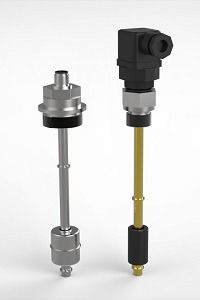



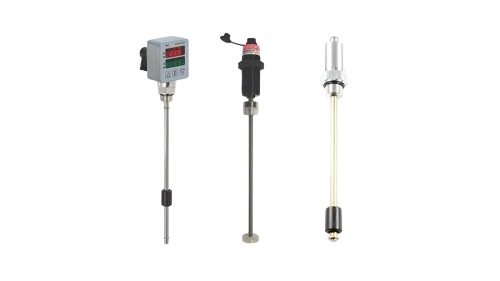










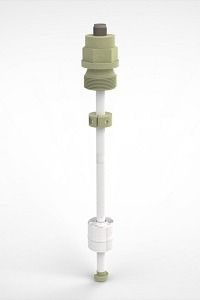
Mini Float Switch - with Temperature Sensor/Switch

LOADING IMAGES
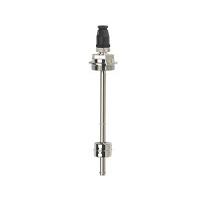
Use of ENGLER Mini Float Switches:
- Versatile fluid compatibility: Suitable for use in almost all types of liquids.
- Wide range of applications: Ideal for shipbuilding, offshore platforms, petrochemical and chemical industries, plant construction, mechanical engineering, hydraulic power packs, cooling systems, potable water treatment, food and beverage industry, and power systems.
- Compact design: Perfect for use in small containers, compact systems, and for monitoring hydraulic power packs.
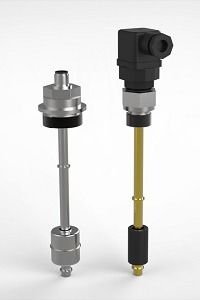
The operating principle of a float switch with a Reed contact relies on magnetic actuation. The float switch includes a buoyant body (float) containing a magnet, which moves with the liquid level. As the float rises or falls, the magnet approaches a Reed contact—a sealed glass tube containing two ferromagnetic contact leaves. When the magnet nears the Reed contact, the magnetic field pulls the leaves together, closing the circuit. This change can be used to trigger an alarm, activate a pump, or control other devices.
In industrial automation, temperature sensors are essential for monitoring and controlling temperature in various systems. They provide accurate data to ensure optimal operation, product quality, and energy efficiency. These sensors are often integrated with process control systems for real-time monitoring and regulation.
A temperature switch, particularly a bimetallic switch, operates by mechanically opening or closing a circuit based on temperature. It consists of two metal strips with different thermal expansion rates bonded together. As temperature changes, the strips bend due to unequal expansion, causing the switch to move. Once the temperature hits a pre-set threshold, the switch either opens (interrupting current) or closes (allowing current). This mechanism is often used for overheat protection or automatic activation of fans, heaters, or alarms.
Advantages:
- Precise Level Monitoring: Mini Float Switches with temperature sensors ensure accurate liquid level detection, preventing overfilling or underfilling and extending equipment life.
- Reliable Temperature Measurement: Integrated sensors deliver precise temperature readings for safe, efficient process control.
- Space-Saving Design: Compact size allows use in tight or confined spaces—ideal for small tanks or systems.
- Versatile Applications: Suitable for use in industries such as shipbuilding, petrochemicals, food processing, cooling systems, and more.
- Durable and Robust: Built from high-quality materials for reliable performance in demanding environments.
- Easy Installation & Maintenance: Simple to integrate into existing systems and designed for low maintenance.
- Customizable Options: Available in different materials, connectors, and mounting styles to suit specific needs.
- Cost-Efficient Solution: Combines level and temperature monitoring in one device—reducing hardware and installation costs.
Applications & Industries:
- Industrial Automation: Used to monitor and control fluid levels and temperatures in heating, cooling, lubrication, and production quality control processes.
- Shipbuilding & Offshore: Monitor fuel levels, ballast tanks, and other liquid systems to optimize resource use and enhance safety.
- Petrochemical & Chemical Industry: Ensure safe and compliant monitoring of chemical tank levels and processes for efficient operation.
- Plant & Mechanical Engineering: Maintain stable cooling and lubrication fluid levels to prevent equipment damage and reduce downtime.
- Cooling & Air Conditioning Systems: Regulate fluid levels and temperature for effective cooling, energy efficiency, and overheating protection.
- Drinking Water & Food Industry: Provide hygienic, reliable monitoring of liquid levels and temperature to ensure safety and product quality.
-
×
-
×
-
×