










Two-Hand Control SafeCAP
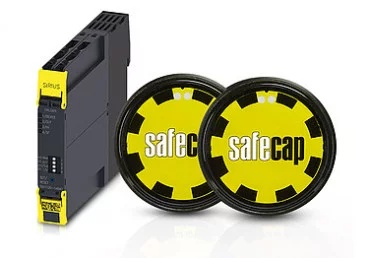
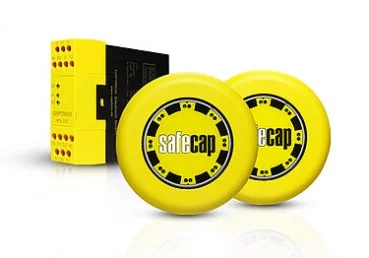
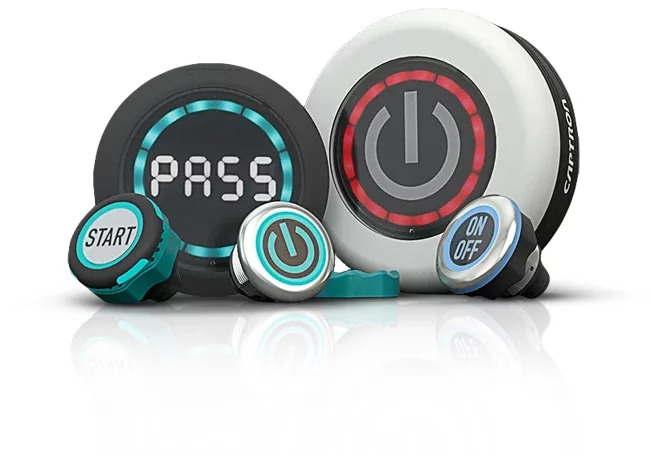
CAPTRON is regarded as the pioneer of the first capacitive two-hand control with the highest safety category (Cat. 4) and PLe according to DIN EN ISO 13849-1. The capacitive two-hand control “safeCAP” enables pressure-free and safe operation of heavy machines and systems with a high risk of injury in production automation, such as presses and punching machines.
To activate the machine, the user simultaneously presses two capacitive buttons that are connected to a safety relay. Incorrect or inattentive switching with just one hand or another part of the body is detected by the system and the machine is not triggered.
CAPTRON offers the safeCAP two-hand control with additional protective elements such as the Protector or the control panel for table mounting. These combinations increase protection and are certified in accordance with DIN EN ISO 13851. The dynamically switching SENSOR push-buttons detect interference factors such as dirt, dust or foreign objects. However, it is possible to operate the push-buttons with disposable or work gloves.
The fully electronic construction of the SENSOR pushbuttons is specially designed for daily and fatigue-free continuous use and impresses with its extreme durability, reliability and robustness. The user receives visual feedback via LEDs.
For the individual design of a two-hand control with no or low safety requirements, the SL3x SENSOR pushbutton series is available without independent approval in accordance with EN ISO 13849-1. The durability, reliability, robustness and ergonomics correspond to those of the safeCAP SC series.
SC30 (according to EN 13851):
- Ø 50 mm sensing face
- Installation via standard Ø 22.5mm mounting hole
- Single-channel and dual-channel available
- Compatible with Siemens safety relays
- TÜV SÜD certified (EN ISO 13849-1, EN ISO 13851)
SC4:
- Ø 63 mm switching surface
- Certified according to PLe (DIN EN ISO 13849-1)
- Compatible with MCR-225 safety relay
- Typ III C certified according to DIN EN 13851